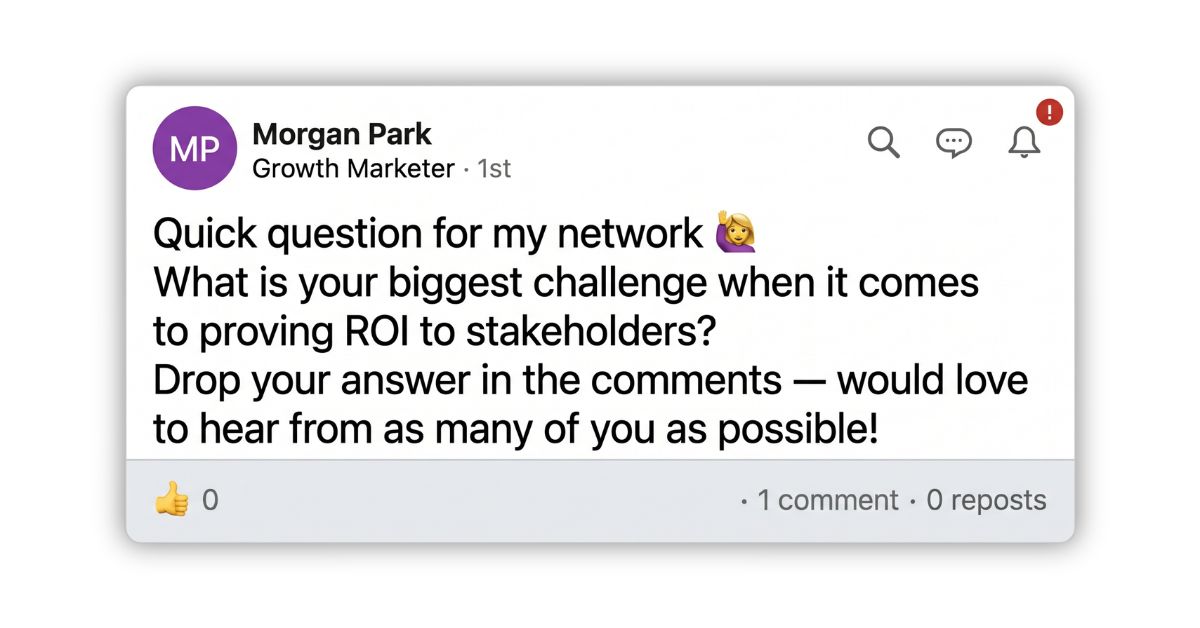
This is not just a portfolio piece. This is a working concept any marketing agency can build, own, and use to drive traffic, generate leads, and position themselves as the team that actually understands content.
I built it to show my thinking. You can build it to grow your business.
You already manage LinkedIn for clients. This tool becomes your unfair advantage. You run every client post through your own scoring framework before it publishes. You show clients the before score and the after score. Suddenly "we improved your content" has a number attached to it. That number is yours. Nobody else has it. That is a retainer-worthy differentiator — and it costs you an afternoon to build.
LinkedIn has a content quality problem. Most posts are noise. A native post scoring system built into Creator Mode would increase average content quality, session time, and creator retention. The data from billions of scored posts would be the most valuable content intelligence dataset on the internet. This tool is the proof of concept for that feature. It already works.
You write your own content. You have no team to review it. You post it and either it works or it dies and you never know why. This tool tells you why — before you publish. The score tells you whether to hit post or rewrite. The three voice rewrites show you what "fixed" actually looks like. Use it before every post.
This is not a generic rubric. Every dimension is weighted against what the LinkedIn algorithm actually rewards and what real human readers actually respond to.
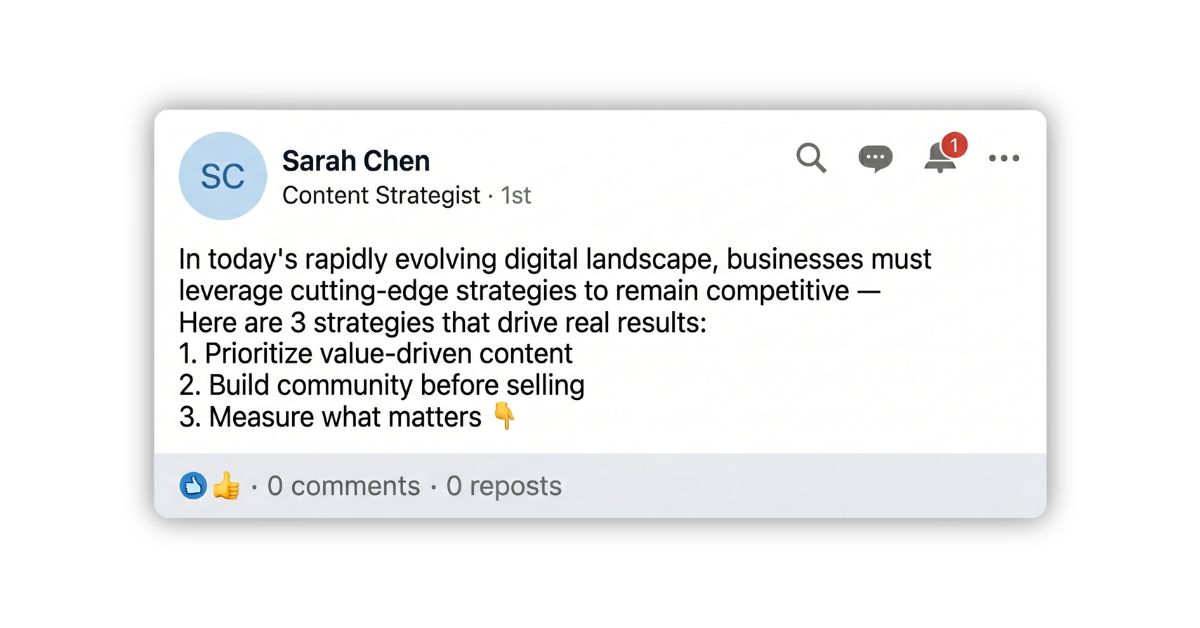
The first line of a LinkedIn post does one job. It decides whether the second line gets read. Most people write the hook last, treat it as a label for the post, and wonder why nobody clicks "see more." A strong hook creates a gap — between what the reader knows and what they suddenly need to know. If your first line could be the caption on a stock photo, it is not a hook.
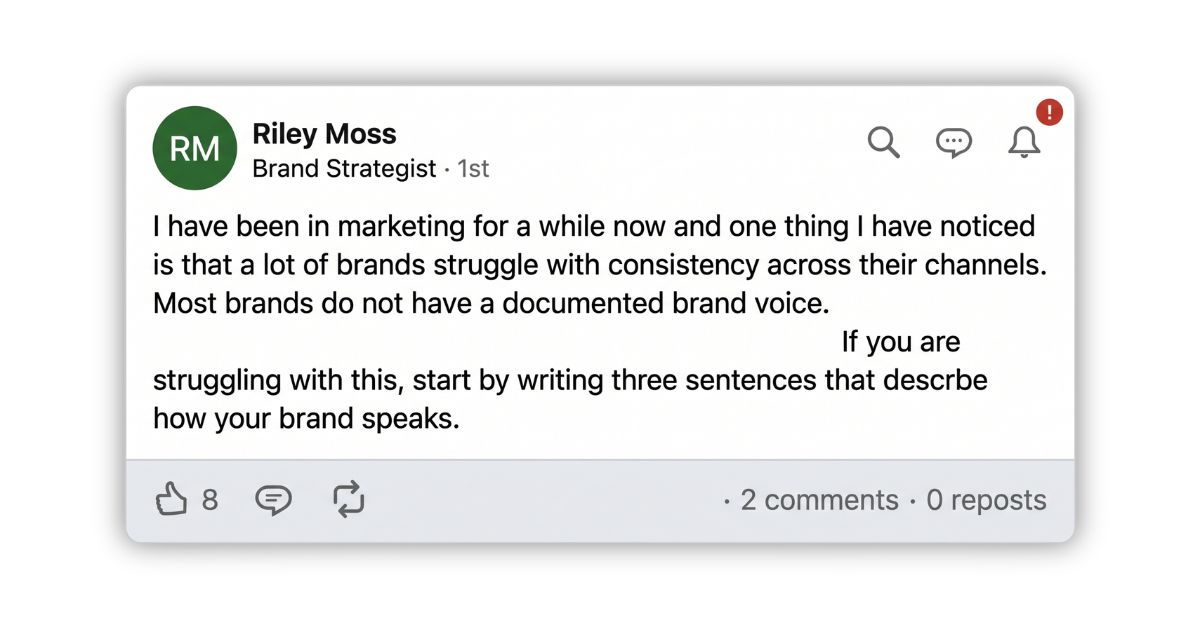
LinkedIn is read on phones, in lifts, between meetings, at 11pm when someone cannot sleep. Your post competes with everything. Short paragraphs are not a style preference. They are a survival mechanism. One idea per line. White space is not empty. It is breathing room that keeps the reader moving forward.
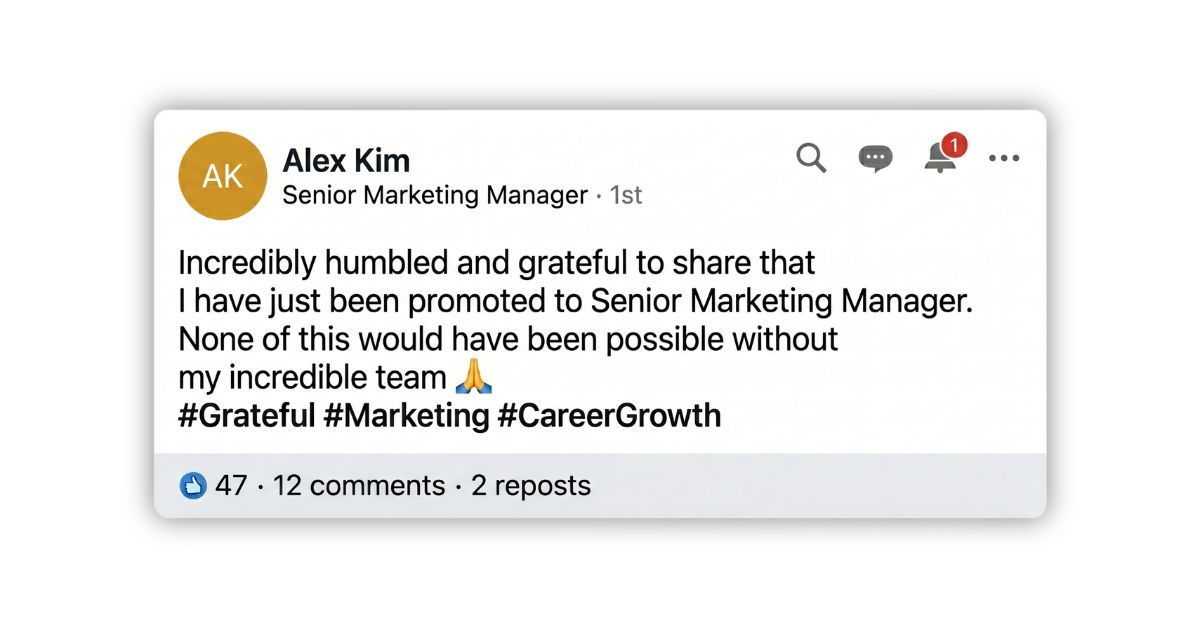
People share content that makes them feel something or teaches them something they did not know before. Generic advice does neither. The post that stops someone mid-scroll does so because something in it is specific enough to feel true, personal enough to feel human, or surprising enough to break the pattern. Emotional pull is not drama. It is specificity.
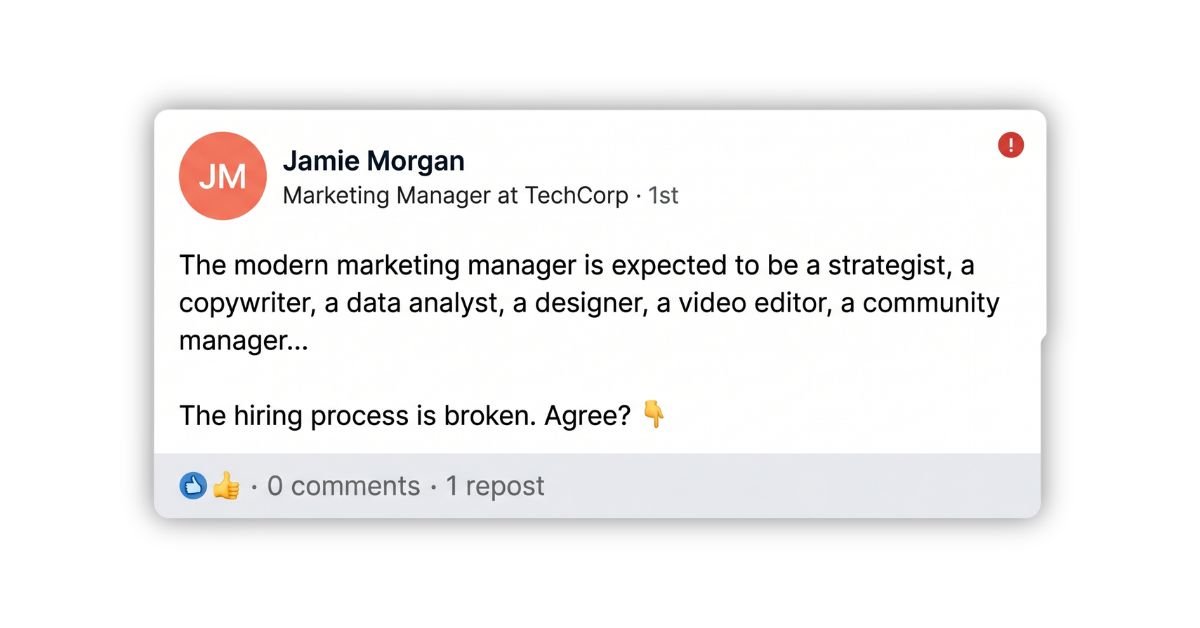
The worst CTA on LinkedIn is "Agree?" It asks the reader to validate your opinion with zero effort from your side and zero value exchange. A strong CTA gives before it asks. It offers a framework, a resource, a follow-up thought, and then invites a response. The reader should feel like engaging is a natural next step, not a favour they are doing you.
Drag the sliders to see how each dimension affects the total score.
Good content comes from real thinking. Not from copying someone else's caption and calling it a strategy. Not from en-dashed AI output dressed up as an opinion. Not from performing ideas you do not actually believe.
This is the kind I build for real clients every day. The difference is I wrote this brief myself.